
Alternative Provision at Play Torbay
Outdoor, trauma-informed Alternative Provision for children and young people with SEND and SEMH needs.
A trusted and quality assured provider for Torbay Children’s Services, Play Torbay provides play-based Alternative Provision for children and young people who are unable to access mainstream education due to Social, Emotional and Mental Health needs.
Our provision uses therapeutic play, outdoor environments and relationship-based support to help young people rebuild confidence, regulate emotions and re-engage with learning.
Our experienced team specialises in supporting children and young people with SEND and SEMH needs. Staff are trained in trauma-informed practice and Team Teach, and the provision is led by an experienced manager with a PGCE with SEND specialism and QTS, with additional supervision support from a DDP practitioner and social worker.
Thinking of making a referral?

Our Approach
Our model is grounded in the Playwork Principles, recognising that play is essential for emotional development and wellbeing.
Many young people referred to Alternative Provision have experienced anxiety, trauma, or barriers that make classroom environments difficult. Through nature-based play and consistent adult relationships, we help young people:
develop emotional regulation
rebuild trust with adults
improve social confidence
increase engagement and attendance
prepare for reintegration into education
Sessions take place in safe, nature-rich environments designed to encourage exploration, creativity and resilience.
We are PROUD of our 96.9% attendance record in the 24/25 Academic Year.
We are PROUD of our 96.9% attendance record in the 24/25 Academic Year.
Where we work
Play Torbay delivers Alternative Provision from two enclosed, specialist outdoor play environments or, if appropriate, out in the community across Torbay. Each setting is designed to provide a safe, supportive space where children and young people can explore, build relationships and develop confidence through play.
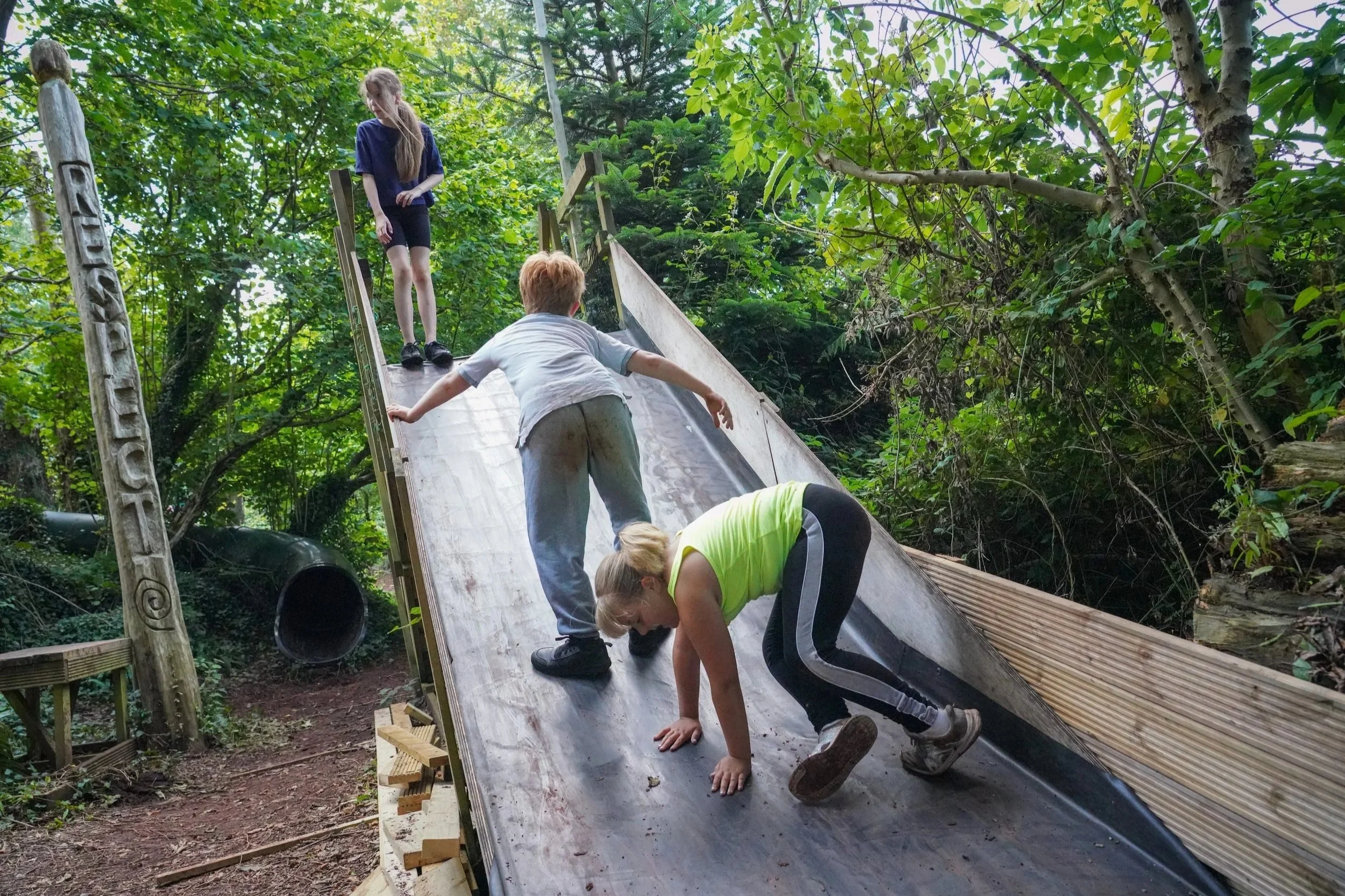
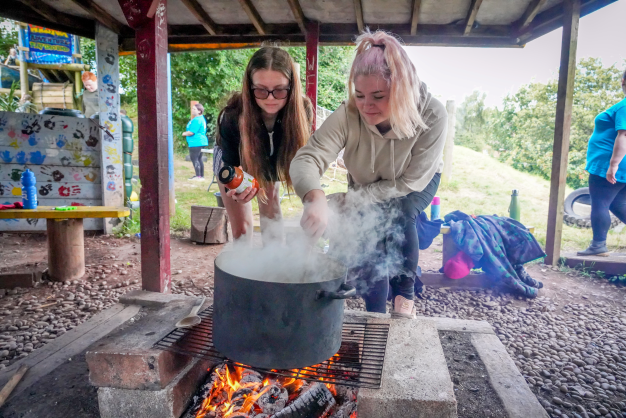
Indigos Adventure Playground
Indigos in Brixham, provides a calm, nature-rich environment that supports emotional regulation and exploration. The site includes outdoor play areas, forest-school spaces, heated cabins and ecological learning environments.
This setting allows young people to engage in creative, physical and reflective play while remaining within a safe and secure environment.
Wildfox Adventure Playground
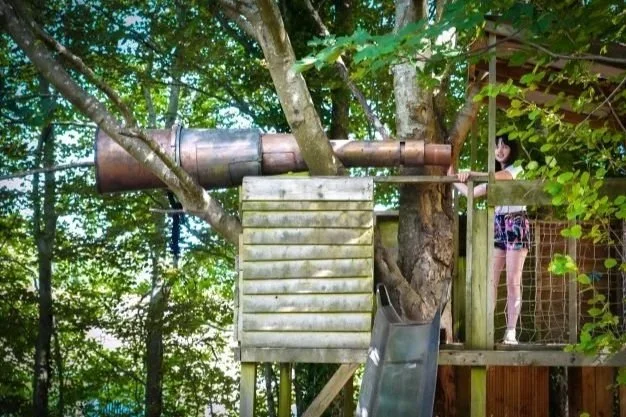
Wildfox Adventure Playground offers a large enclosed adventure playground designed for active play and social interaction.
Facilities include play structures, treehouses and outdoor learning spaces. The site is currently being further developed with improved indoor-outdoor learning areas and forest-school facilities to expand opportunities for young people.

Community-Based Sessions
Where appropriate, young people may also access community-based activities beyond our core sites.
These sessions allow pupils to:
practise social skills in real-world environments
build confidence outside familiar settings
develop independence and decision-making
strengthen connections with their local community
All off-site sessions are carefully planned and risk-assessed and are always supported by familiar staff to ensure young people feel safe and supported.
Who We Support
We support children and young people who may experience:
Social, Emotional and Mental Health needs (SEMH)
Autism and neurodivergence
Emotionally Based School Avoidance (EBSA)
risk of exclusion
trauma or attachment difficulties
anxiety or low self-confidence
barriers to accessing mainstream education
Many pupils access our provision as part of an Education Other Than at School (EOTAS) package
What a Placement Looks Like
Minimum of 3hr session per week, morning or afternoon, up to 15hrs per week. Each young person begins with 1:1 support from a designated worker to build trust and confidence.
As the young person becomes more comfortable, they may gradually move into supported group play sessions while still receiving consistent support from their key adult.
Placements are personalised and designed around each pupil’s needs and EHCP outcomes.
Measuring Impact
We monitor each young person’s development using a combination of recognised assessment tools and everyday observations.
Our main assessment framework is the Boxall Profile, which helps us understand a young person’s social, emotional and behavioural development and identify the support they need to thrive.
Alongside this, we may also use:
Strengths and Difficulties Questionnaire (SDQ)
WHO Wellbeing Scale
Cherry Garden Assessment Framework (particularly for pupils with SEND or early developmental learning stages)
These tools help us establish a clear starting point and track progress over time.
We also monitor progress through:
daily observations and reflective practice
engagement in play and group activities
conversations with young people and families
regular reviews linked to EHCP outcomes
In the 2024-25 academic year our pupils achieved a 96.9% attendance rate, reflecting the strong relationships and positive engagement created within our provision.
Progress is shared with schools and local authorities through weekly and half-termly reports, ensuring everyone involved in a young person’s support remains informed.

Supporting Transitions
Our ultimate goal is to help young people progress to their next stage of education or training.
Transition support may include:
phased reintegration into school
supported visits to new settings
information sharing with receiving providers
continued emotional support during the transition period
This ensures young people move forward confidently and successfully.
Safeguarding
Safeguarding is central to everything we do.
Our safeguarding framework includes:
Designated Safeguarding Lead and Deputies
CPOMS safeguarding recording system
thorough and robust safer recruitment procedures
in depth safeguarding training for all staff
partnership with Torbay Safeguarding Children Partnership
All safeguarding concerns are reported in line with local authority procedures.
Making a Referral
Referrals are usually made through:
Schools
Social Care
SEN Casework Team
Vulnerable Pupils Team
We aim to complete initial visits within five working days of referral confirmation where possible.
To discuss a placement or make a referral, please contact our service manager Sam Wilson. Email and number to the right →
Thinking of making a referral?
Frequently Asked Questions
-
Referrals are typically made by schools, Local Authorities, SEN casework teams or professionals involved in a young person’s support. If you are unsure whether a referral is appropriate, we are always happy to discuss potential placements.
-
Our Alternative Provision supports children and young people aged 5–21 who are unable to access mainstream education due to Social, Emotional and Mental Health (SEMH) needs or other barriers to learning.
-
Many young people referred to our provision may experience:
Social, Emotional and Mental Health (SEMH) needs
Autism and neurodivergence
Emotionally Based School Avoidance (EBSA)
anxiety or low confidence
trauma or attachment difficulties
Placements are discussed individually to ensure we can provide the right level of support.
-
Sessions are play-based and designed around each young person’s needs and interests. Activities may include outdoor play, forest-school style activities, creative projects and opportunities to develop social skills and confidence. Young people are supported by consistent adults and encouraged to explore at their own pace.
-
Yes. Many young people begin their placement with 1:1 support from a dedicated worker to help them build trust and feel safe in the environment. As confidence grows, they may gradually join small group sessions while still being supported by a familiar adult.
-
We use recognised assessment tools such as the Boxall Profile, alongside measures like the SDQ, WHO Wellbeing Scale and Cherry Garden Assessment, to understand each young person’s development and track progress. Regular observations and reviews also help ensure support remains tailored to individual needs.
-
Placements are flexible and depend on the needs of the young person and the goals agreed with the referring organisation. Some placements are short-term interventions, while others provide longer-term support.
-
Yes. Supporting young people to move forward into education, training or other suitable provision is a key part of our work. We collaborate closely with schools, families and professionals to support smooth transitions and reintegration where appropriate.
-
Where possible, we aim to begin provision within five working days of a confirmed referral, allowing young people to access support quickly.
-
Safeguarding is central to our provision. We have a Designated Safeguarding Lead and Deputy DSLs, use secure systems to record concerns, and follow local safeguarding procedures. All staff receive safeguarding training and safer recruitment checks.